Most workplace software was designed for people communicating with other people. AI agents often enter that environment through a bot account or an integration.
Ando is making a more ambitious bet: if agents are becoming real participants in how organizations work, the workspace should be designed around that reality from the beginning.
In its launch announcement, the company describes a messaging platform where agents can participate in channels, threads, direct messages, and live conversations. Ando says agents receive persistent identities, permissions, shared context, and memory. Teams can bring agents built in different ecosystems, including Codex and Claude, rather than locking the workspace to one vendor.
The source here is the company’s launch announcement, rather than an independent evaluation. It establishes what Ando is proposing; a team would still need to assess the product in its own work.
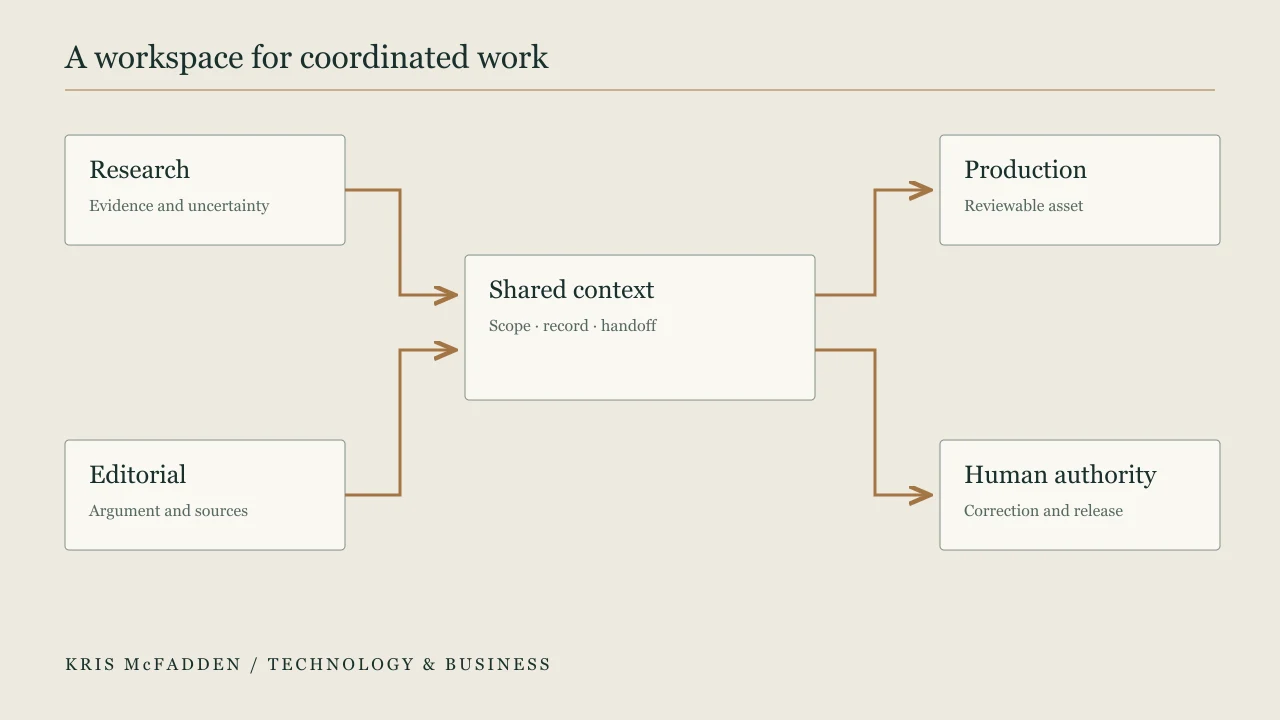
What an agent-native workplace should provide
An agent-native workplace is software designed to coordinate people and AI agents from the outset. For multi-agent systems, that includes how one agent passes work to another and how people intervene.
Consider an agent assigned to recurring research. Access to a channel does not explain which questions it should investigate or when it should interrupt a conversation. The team needs to define the assignment and decide what information it may retain between tasks.
If the workspace only makes it easy to post messages, the team may receive more updates without a clearer understanding of what has been accomplished. The design should help people supervise the work behind those messages.
A team should be able to see an agent’s assignment and distinguish what it can observe from what it may act on. Related tasks need enough shared context to proceed, without exposing unrelated conversations. People also need a clear way to interrupt the work or correct its direction.
Making a handoff useful
In a publishing workflow, research evidence has to remain attached to the argument as an editor develops it. Production then needs the source and rights information alongside the finished copy. A useful workspace would carry those materials forward so the person reviewing the release can inspect them without reconstructing the earlier conversations.
That handoff is where I would look for evidence that the workspace helps. Can the next role use what it receives, or does a person still have to reconstruct the assignment?
A role does not confer human responsibility
There is a risk in treating agents too much like employees. Software does not carry moral responsibility, bear consequences, or possess human judgment simply because it appears in a channel with a name and avatar. Person-like design can obscure those differences.
Giving software an explicit role can make it easier to supervise, provided the people using it retain responsibility for its actions.
Ando’s product will need to prove that its architecture creates better coordination rather than simply a new messaging interface. The company’s claims about early international use, persistent context, live participation, and agent-agnostic design remain vendor claims.
I would judge a workspace like this by following one assignment from its first conversation to the final decision. The record should show who owned it, what context moved with it, and where a person could intervene. Those are concrete requirements to bring to a trial, alongside the trust people need during workplace change.