A hospital screening project produced 9,140 records for review. By the end of the process, 23 people had enrolled in a trial and started buprenorphine, a medication used to treat opioid-use disorder.
There’s a lot of human work between those numbers. In the full Research Square report, posted as a preprint, researchers describe screening at two urban teaching hospitals. Staff reviewed the records and an addiction specialist checked whether treatment was appropriate. That left 434 potentially eligible patients with chronic pain and opioid-use disorder or opioid misuse. The 23 treatment starts were about 5% of that group.
The original 9,140 were records flagged for review, including people already receiving medication and records that didn’t meet the study’s criteria. They weren’t 9,140 people waiting to enter treatment.
The team reached 201 of the 434 potentially eligible patients. Forty-three agreed to an assessment, 29 were eligible and 23 began treatment. The authors describe difficulties reaching people before discharge, other serious illnesses needing attention and concerns about the medication. The trial record says recruitment difficulties eventually led to the study ending early.
Keep the conversation open
I appreciate the researchers showing how much happens after a system identifies possible need. Technology can help us find an opportunity to offer care. People still have to make contact, listen and work through what comes next.
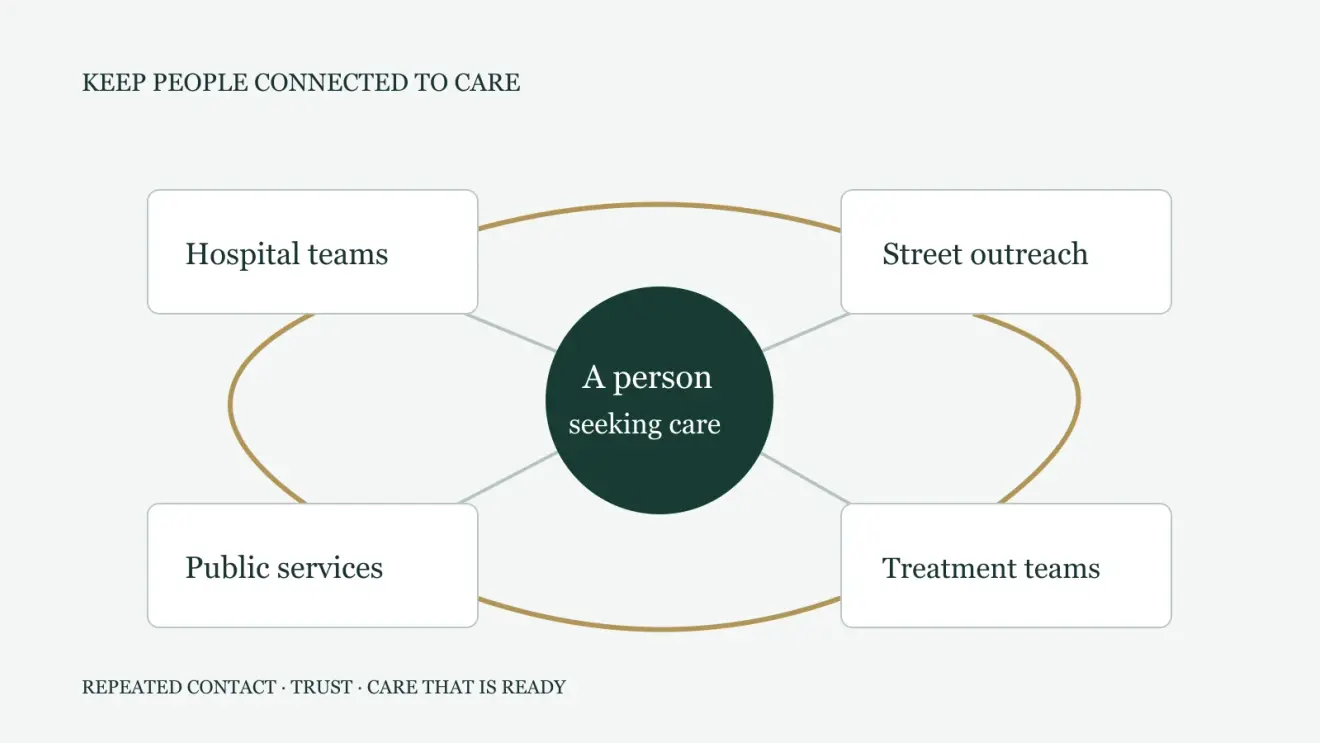
In my professional work in Kensington, I see how many people can be involved in helping someone get well. Hospitals, city services, courts, treatment providers and street teams all have a part. The person who first makes contact may not be the person who’s there when someone is ready to accept help.
That’s why returning matters. Teams go back, build relationships and keep encouraging people. A conversation can help someone begin to believe they’re worth caring for and that getting well is possible. We need to leave room for that conversation to continue when someone isn’t ready today, while respecting the choices they’re making.
Being stuck on the street carries dangers well beyond overdose. Helping someone find a way into treatment and a safer environment takes patience, and it takes resources. When a person is ready, there needs to be someone to call, an appropriate place to go and help getting there. Encouragement means more when we can follow through.
Know who’s helping with the next step
For leaders, I’d want to know how many people we’re identifying, reaching, assessing and helping begin care, then how we’re staying connected afterward. Those are different parts of the work, and each needs attention.
I’d also want to know who follows up when a conversation ends without a connection to care. Hospital staff, outreach workers and treatment teams are doing difficult work. Giving them a clear way to reach one another helps them carry it together. A person shouldn’t have to figure out every handoff alone while they’re trying to get well.