A new study led by Boston University researchers looked at 13,818 facilities offering alcohol treatment. In the 2024 facility survey, 58.5% reported programs specifically for women. Just 4.6% offered childcare.
That last number gets my attention. A woman can want help and still need somewhere safe for her children while she receives it. Having a treatment program nearby doesn’t settle that problem.
This connects to something I care about in my professional work as a treatment provider: what we mean when we say an area has enough capacity. I want us to look closely at whether the people who need help can actually get it.
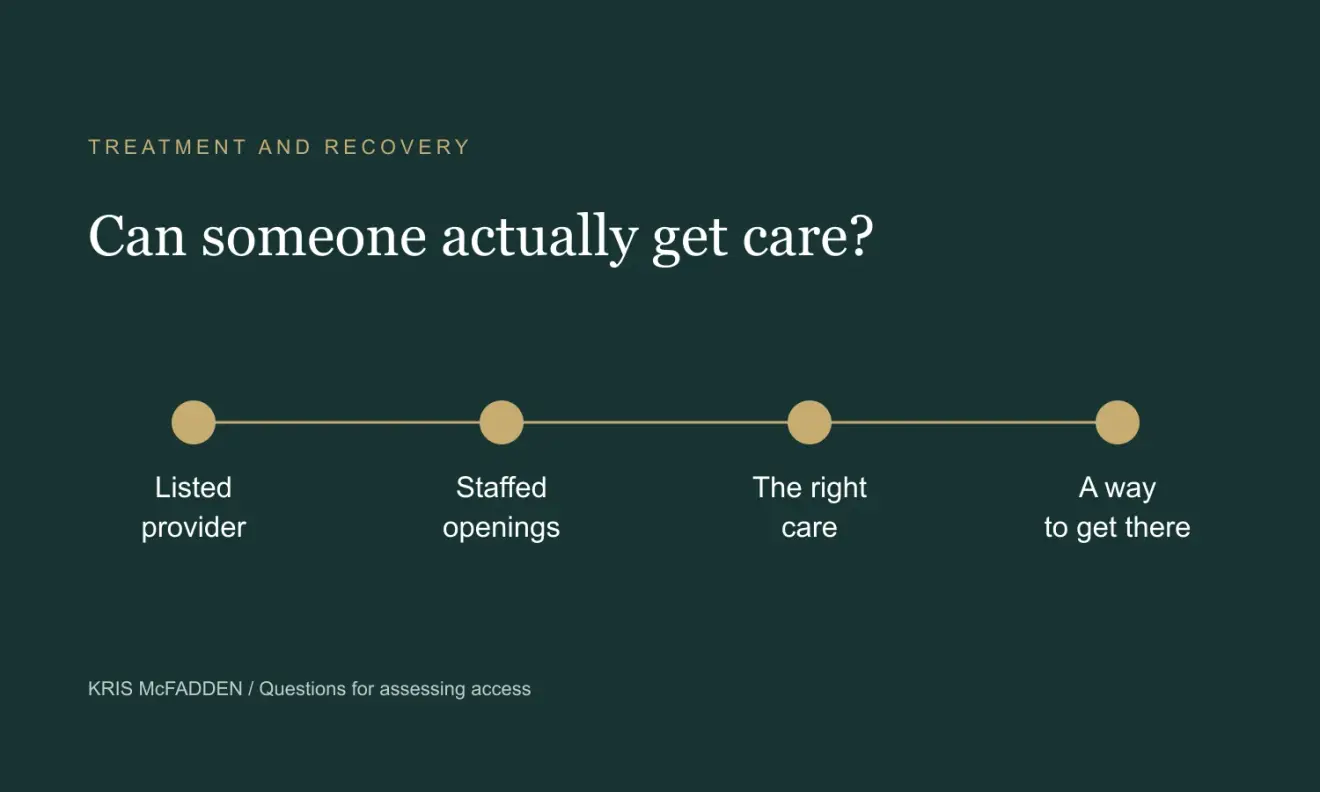
A licensed bed needs staff behind it. A staffed program needs an opening, the right level of care and a way for someone to enter. Transportation, childcare and insurance can all affect whether that opening is usable. We also need providers who can keep their staff and keep their doors open.
The study compares reported services and estimated need across states. My concern about insurance networks is a practical question that follows from it: when a health plan decides it already has enough providers, how current is its picture of who’s accepting people?
Payors have real responsibilities around quality and cost. Providers need to show they can deliver good care. There are people on both sides working hard to get this right, and a clearer view of available care would help them make better decisions.
I’d like those conversations to include current staffing, wait times, available openings and the needs each program can meet. When someone’s ready for treatment, we should be able to tell them who can help and how soon they can get in.